
Brockville inquest urges overhaul of opioid prescribing

Photo by Michelle Siu for the Globe and Mail

KIM MACKRAEL AND ANNA MEHLER PAPERNY
Tuesday, July 05, 2011 – Globe and Mail

Ontario should overhaul its system for prescribing, monitoring and treating patients using prescription opioids, an inquest into two fatal drug overdoses in Brockville has recommended.

The inquest into the 2008 deaths of 41-year-old Donna Bertrand and 19-year-old Dustin King delivered 48 wide-ranging recommendations Tuesday, including mandatory education and auditing of doctors and better systems for monitoring who can access pills.

Mr. King and Ms. Bertrand were found dead in the same apartment within days of each other. He died Nov. 21, 2008, of an OxyContin overdose, passed out on Ms. Bertrand’s couch, where he lay for hours before people in the downtown Brockville apartment noticed something was wrong.

She died 11 days later after ingesting a fatal mix of sedatives and antidepressants.

Continue reading

Inquest into Brockville’s fatal overdoses lays bare the toll of prescription-drug addiction

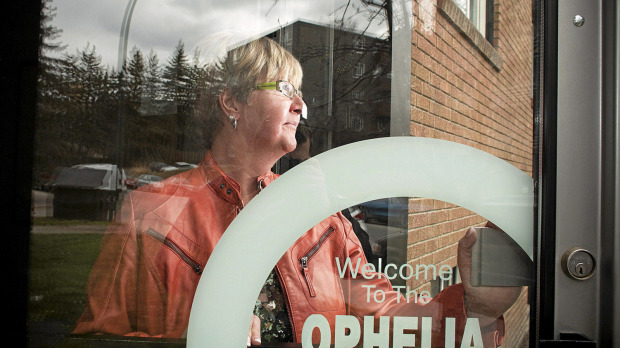
Hilda Bertrand stands outside the Brockville train station on Monday, June 27, 2011. Her daughter, Donna Bertrand, died of an overdose Dec. 2, 2008 -- days after 19-year-old Dustin King died of an OxyContin overdose in her apartment. An inquest into their deaths was ongoing June 2011 and heard closing arguments Wednesday, June 29, 2011.
(Photo by Anna Mehler Paperny/The Globe and Mail)

Saturday, July 2, 2011 – Globe and Mail
ANNA MEHLER PAPERNY

BROCKVILLE, ONT. — Day after day for weeks on end, Hilda Bertrand and Brenda Toupin-Wiles sat in a Brockville, Ont., courtroom and listened to strangers dissect their children’s deaths.

The inquest into the fatal 2008 overdoses of Ms. Bertrand’s 41-year-old daughter and Ms. Toupin-Wiles’s 19-year-old son has given both families a crash course in pharmacology and prescription-drug abuse.

“It’s been educational. And disturbing,” Ms. Toupin-Wiles said. “I’ve been educated on how to crush, smoke, snort, inject every kind of drug you can imagine.”

Continue reading

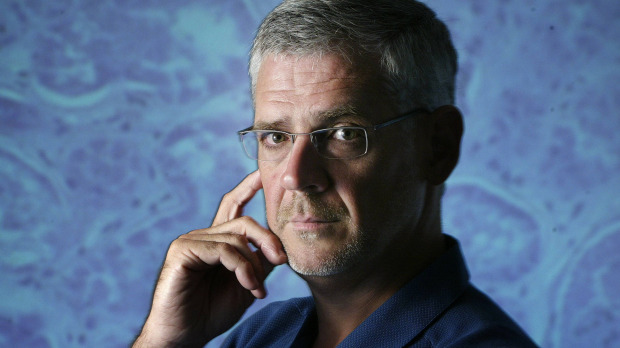
30 years in, Canada turning from leader to laggard in HIV/AIDS research

Photo by John Lehmann/The Globe and Mail

ANNA MEHLER PAPERNY – Globe and Mail
Friday, June 03, 2011

Three decades after AIDS first collided with, then consumed Julio Montaner’s career, he still can’t get his words out quickly enough. He speaks in cascades, with the urgency of someone in danger of losing his audience.

But he has a much easier time getting people to listen to him now than he did even 10 years ago.

AIDS turns 30 this week – a milestone for a shape-shifting disease that specializes in targeting each society’s most powerless populations.

It’s also a milestone for the Argentinean-Canadian doctor, who was the first clinician in Canada to dedicate himself to solving the riddle of HIV/AIDS, long before becoming celebrated internationally as a research pioneer. He’s head of the B.C. Centre for Excellence in HIV/AIDS and past president of the International AIDS Society.

Continue reading

Overdose inquest: Brockville deaths put focus on prescription-drug abuse

Dustin King was 19 when he died after snorting half an 80-milligram OxyContin tablet in Donna Bertrand's apartment. Ms. Bertrand, 41, died of an overdose in the same apartment days later.

Tuesday, May 31, 2011 – Globe and Mail
ANNA MEHLER PAPERNY

She was a 48-year-old mother and former nurse, receiving disability payments for back pain.

He was a fearless 19-year-old known for befriending everyone, who bounced from high school to temp jobs, from one couch to another when he and his dad argued.

They died days apart, in the same apartment, overdosed on drugs.

She had prescriptions – for the OxyContin toxicologists say caused his death, and the cocktail of antidepressants and sedatives they say precipitated hers.

He did not.

An inquest starting in Brockville this week into the 2008 deaths of Donna Bertrand and Dustin King will try to piece together not how they died so much as how to prevent deaths like theirs.

Continue reading

Out of retirement and into the flood zone: Sodden Manitoba calls on forecasting veteran

Thursday, May 12, 2011 – Globe and Mail
ANNA MEHLER PAPERNY

As Manitoba prepares to open a floodgate in the midst of the Assiniboine River’s worst deluge in centuries, the province is turning for help to a forecasting veteran who thought he’d analyzed his last flood when he retired last year.

Alf Warkentin got the call on Tuesday, when a senior official in the provincial government phoned him, pulling him out of retirement to help fight a flood wreaking havoc in the region while testing the mettle of the engineers trying to combat it.

Continue reading

A different kind of stimulus package: How ending poverty can save the economy

Photo by Chris Bolin for the Globe and Mail

ANNA MEHLER PAPERNY AND TAVIA GRANT
Friday, May 06, 2011 – Globe and Mail

Behind corridors lined with contemporary Canadian art, sitting at a dark wooden table in his downtown Toronto office, Ed Clark offers some economic advice that might not typically come from Bay Street.

Give the poor a tax break.

“I say, ‘Why don’t you cut the taxes of the most overtaxed people?’ It isn’t Ed Clark,” the Toronto-Dominion Bank CEO said in an interview earlier this year. “It’s the people at the low end, because they face the highest marginal tax rates.”

Continue reading

In Fukushima’s wake, Canadian nuclear plants prepare for the worst

Photo by Fred Lum/The Globe and Mail

ANNA MEHLER PAPERNY
Wednesday, May 04, 2011 – Globe and Mail

Canada’s nuclear operators are taking extra steps to make plants safe in response to the Fukushima nuclear catastrophe – the first admission that, despite assurances Canada’s nuclear facilities aren’t vulnerable to that kind of meltdown, Japan’s Chernobyl-scale disaster is forcing them to re-evaluate how the industry prepares for emergencies.

In the weeks after the nuclear plant in Japan was damaged in the March 11 earthquake and tsunami, the Canadian Nuclear Safety Commission asked all operators to review their safety and emergency procedures. Their responses, due last week, assure the national regulator and the public that Canada’s plants are safe. But they also set out plans to make them safer – an indication of a renewed urgency in preparing for the worst-case emergencies, no matter how farfetched.

Continue reading

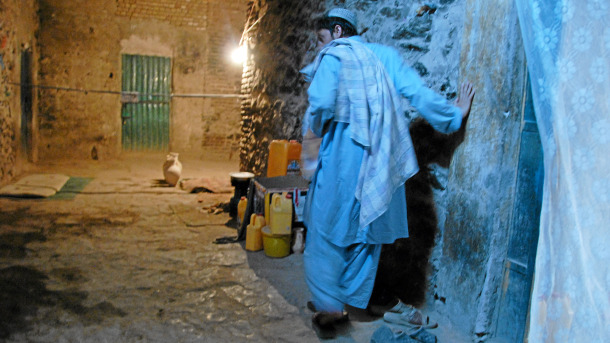
Sarpoza prison break throws Canada’s Afghan legacy into doubt

Photo by Graeme Smith/Globe and Mail

Wednesday, April 27, 2011 – Globe and Mail
ANNA MEHLER PAPERNY

If there is to be a large-scale international move to boost Afghan security, following a subterranean Taliban-assisted escape from Sarpoza prison early Monday morning, it is not likely to come from Canada. That will probably fall to U.S. forces coming to pick up the pieces in Kandahar province.

Some note this week’s escape highlights the questionable legacy of Canada’s efforts in Kandahar just as troops prepare to hand over responsibility.

But Canadians who’ve worked near Sarpoza argue the audacious getaway also indicates just how Sisyphean a task it is to foster even a fragile sense of security in this volatile Afghan province.

Continue reading

Fukushima’s fallout: Ripple effects on nuclear power in Canada

Darlington Nuclear Plant's is designed to suck any radioactive steam that could be released. to date, this has not been needed. Photos taken April6 2011 during a media tour of the Ontario Power Generation's Darlington Nuclear facility near Oshawa, Ont.
(Photo by Fred Lum/The Globe and Mail)

Anna Mehler Paperny – Globe and Mail
Thursday, April 07, 2011
The disaster in Japan is forcing this country to re-evaluate the way in which it pursues – and safeguards – nuclear power

The rectangular concrete bay tasked with containing 150,000 bundles of spent uranium looks like a swimming pool, with a temperature – 30 C – to match.

But the tranquil-looking body of demineralized water at Ontario’s Darlington nuclear generator belies the painstaking, energy-intensive effort to keep it cool.

Its fuel-cooling counterpart at 40-year-old Fukushima Daiichi spent weeks emitting high levels of radiation. A blast of liquid gas stemmed a leak this week, barely 48 hours before another powerful quake further complicated efforts to contain the damage.

Continue reading

The price of democracy: Canada’s election costs have skyrocketed in the past decade

Saturday, April 2, 2011 – Globe and Mail
ANNA MEHLER PAPERNY

When Canadians vote on May 2, they’ll be paying for a federal election whose cost has grown 50 per cent in the past decade, thanks in large part to the money given to political parties.

This year’s election is expected to cost $300-million – up from $198-million in 2000.

The amount spent by Elections Canada covers everything it takes to rev up a cross-country electoral machine at the drop of a writ – from hiring and training about 200,000 people, many of whom will only be needed for a day or two, to renting polling stations and conducting campaigns to boost voter turnout (which dropped to only 59 per cent in 2008).

Continue reading