Ontario election 2011: For Ontario NDP Leader Andrea Horwath, it’s all about connecting

Photo by Anna Mehler Paperny/The Globe and Mail

Saturday, September 24, 2011 – Globe and Mail
ANNA MEHLER PAPERNY

Friday night in North Bay, Ont. The blonde behind the bar is talking up patrons on tax policy.

They aren’t sure who she is or why she’s here; 15 minutes ago, they’d never heard her name. But they are riveted and, for that matter, so is she: Her politely agitated handlers need to pry her away to scrum outside the pub.

“Can you get her to come back?” schoolteacher and pub-goer Val Spivey asks. “We want to ask about her education policy.”

This is what Andrea Horwath does.

Continue reading

Politics not in the cards for Andrea Horwath’s son. But his mom? “She’d be stoked” to be premier

Photo by Anna Mehler Paperny/Globe and Mail

Friday, September 23, 2011 – Globe and Mail

ANNA MEHLER PAPERNY

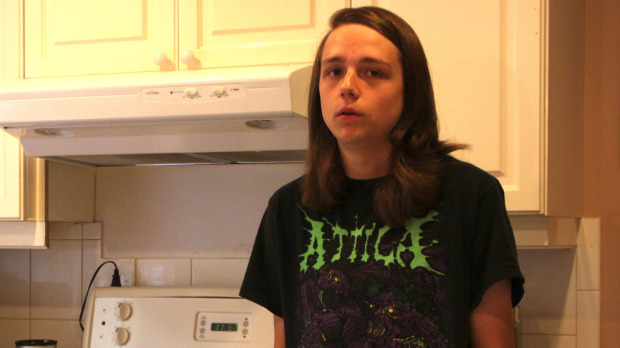
Hamilton — Julian Leonetti has a habit of acing his civics exams. But you could argue he has an unfair advantage.

Mr. Leonetti, 18, was raised immersed in a political milieu – tagging along to meetings and putting up signs for his mom, Ontario NDP Leader Andrea Horwath.

He remembers going from day care to Ms. Horwath’s office in Hamilton city hall, where she was a councillor.

“I would hang with her secretaries and meet all the politicians. … It was actually a really, really, really good environment to grow up in,” he says.

Mind you, he wasn’t so sure about that at the time.

“When I was there, I was bored as hell. But when I look back on it, every other kid was sitting at home, watching Arthur on TV. Those kids weren’t learning what I was learning.”

Continue reading

9/11 in focus: For five men, tragedy remains over photo of 9/11’s first casualty

Photo by Shannon Stapleton/Reuters

Friday, September 2, 2011 – Globe and Mail
ANNA MEHLER PAPERNY

NEW YORK — John Maguire still has the shirt.

Its blue fabric is laced with pale 10-year-old dust, and torn in the back where he was peppered with debris as he struggled to help carry the dead weight of a stranger he felt driven to assist.

“When the picture was out there, I figured maybe I’d hang on to this just as a memento. … It’s hard to throw something away that has that much history attached to it.

“It probably isn’t safe,” to keep that dust around, he acknowledges. “But one day, I’ll show my son.”

Continue reading

9/11 in focus: NYPD officer recalls choking cloud of dust when twin towers fell

Photo by Ruth Fremson/New York Times

Thursday, September 1, 2011 – Globe and Mail
ANNA MEHLER PAPERNY

As Richard Adamiak sought refuge, the choking cloud of dust came in with him.

“It was coating everything. It was getting everywhere,” he recalls. “But it was better than being out on the street, breathing it.”

Even within the sanctuary of the deli, it was almost impossible to draw a breath.

“Your mouth felt like someone took a bag of powdered concrete and threw it in.”

Continue reading

World Trade Center survivor escaped from wrecked tower, but never left it behind

Photo by Phil Penman

August 31, 2011 – Globe and Mail

ANNA MEHLER PAPERNY

Before making his way down the burning, crumbling North Tower, Srinath Jinadasa stopped to water his begonias.

It was the sort of calculation an engineer would make, an attempt to maintain rational thought in an irrational circumstance.

For the Port Authority engineer, the emergency had a sense of déja vu: He’d been working in that same office eight years earlier when a bomb went off in the basement of the World Trade Center.

Continue reading

The 9/11 Decade: The spontaneous snapshot that has endured in a German woman’s life

Tuesday, August 30, 2011 – Globe and Mail
ANNA MEHLER PAPERNY

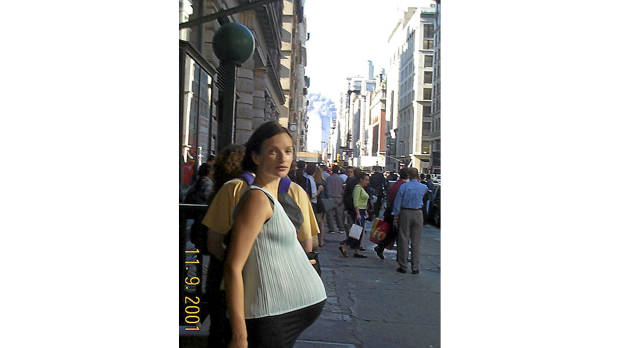
She still isn’t sure what compelled her to do it. Why, standing in bewilderment with her colleagues by the Flatiron Building near 23rd Street, they chose to take pictures of each other as the Twin Towers smoked in the distance.

And as she turned toward the camera, she didn’t know what to do with the muscles in her face. Some of the books and blogs that reposted the photo called it a “Mona Lisa” look. Others wondered how she could appear so clueless to the gravity of the events unfolding behind her.

“I didn’t get what was happening. Definitely not then,” she says. “For me, the focus was much more personal – on me and my belly, and not on the Twin Towers.”

Continue reading

The 9/11 decade: A shared moment of crisis, and the anguish that remained

Monday, August 29, 2011 – Globe and Mail
ANNA MEHLER PAPERNY

OLD BRIDGE, N.J. — It wasn’t until she collapsed outside the building that the pain took over.

Throughout the 78-storey trek to the bottom of the South Tower of the World Trade Center, Donna Spera was unaware of her surroundings, the passage of time or her own condition.

She remembers blood on the stairs, but didn’t think it was hers. She recalls crawling over an elevator smashed through the stairwell, but not how her legs became lacerated. She couldn’t figure out why a friend wrapped his shirt around her hand.

But once outside, she became aware of the scorched and melted skin on her arms and back; of her gashed knees, shattered hand and bloody scalp. And that’s when Dominic Guadagnoli grabbed her.

Continue reading

Database will allow Ontario to clamp down on over-prescribing doctors

Toby Talbot/The Associated Press

Friday, August 12, 2011 – Globe and Mail

ANNA MEHLER PAPERNY

Starting in November, the Ontario government will have the ability to collect information on who’s prescribing how many pills to whom, and where those prescriptions are getting filled.

Regulations attached to the province’s planned prescription database, which has been in the works for months, passed cabinet Wednesday. That means that this fall in theory – and this winter in practice, because that’s when the database will be fully functional – the province can start tracking prescriptions and, eventually, clamp down on what Health Minister Deb Matthews calls an urgent problem with over-prescribed narcotics.

Continue reading

Watchdog says prison violence is on the rise; Toews says it’s decreased

CHRIS WATTIE/REUTERS

Tuesday, August 9, 2011 – Globe and Mail
ANNA MEHLER PAPERNY

Canada’s federal prisons are getting more crowded, more tense and more polarized between young and old inmates – and that’s contributing to an increase in violence and deaths behind bars, says Ottawa’s prison watchdog.

As new rules send more people to prison for longer periods of time, correctional investigator Howard Sapers argues, it’s putting a greater strain not only on Canada’s aging prison infrastructure but also on its inmates.

“The indicators that we look at in terms of getting a measure of institutional violence are all going in the same direction,” Mr. Sapers said. “And they’re all going up.”

Public Safety Minister Vic Toews argues that’s not so.

“I haven’t seen that statistic,” he said. “There isn’t as much prisoner-on-prisoner violence that used to exist eight or nine years ago, before we put in policies that restricted some of the movement of prisoners.”

Continue reading

‘Support didn’t show up’: Toronto woman’s death comes as support services slashed

The Shahdady family home in Scarborough, where Shaher Bano Shahdady lived in the basement with her husband, Abdul Malik Rustam, before moving out with the couple's two-year-old son. Barely a month later, friends gathered here to offer her parents their condolences on Ms. Shahdady's death.
(Photo by Anna Mehler Paperny, Globe and Mail)

Tuesday, Aug. 9, 2011 – Globe and Mail

ANNA MEHLER PAPERNY

After the ceremony, family and friends crowded into the Shahdady family’s Scarborough house, prayed and struggled to talk about anything – anything but the 21-year-old daughter they had just buried in a Pickering cemetery; or her son, the two-year-old who’d spent more than 15 hours in the apartment with her body; or the husband her father had chosen, now charged with killing her.

Abdul Malik Rustam, who she’d sponsored to join her in Canada just months earlier, faces a first-degree murder charge. He appeared briefly by via video feed in a Scarborough courtroom Monday, speaking with counsel through an Urdu translator. He was clean-shaven but for a small moustache and wearing a loose-fitting orange jumpsuit. He’s to appear again Tuesday.

Shaher Bano Shahdady’s death – in the apartment she’d moved into, having left her husband just weeks earlier – rocked the city’s close-knit Balochi community, an ethnic group from Pakistan’s largest province.

But the problem isn’t that cases like this are shockingly rare. It’s that they aren’t.

Continue reading