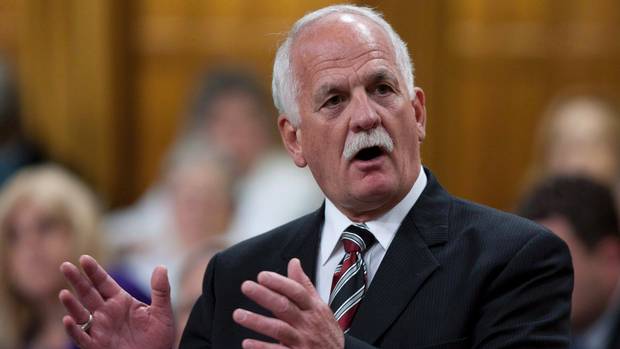
Crackdown on mentally ill offenders could overwhelm strained system, critics charge

Anna Mehler Paperny, Global News : Tuesday, February 12, 2013 1:00 PM

Ottawa’s plan to crack down on mentally ill offenders could accomplish the opposite of its intent, critics say – pushing more people with mental illness into a prison system unable to treat them, and putting seriously ill patients in makeshift, less secure accommodation in overflowing forensic hospital wings.

Full story here.

Canada’s prisons brace for shrinking spending and a growing population

ANNA MEHLER PAPERNY

Monday, August 20 – Globe and Mail
Corrections Canada faces years of big budget cuts even as its resources are stretched increasingly thin.

The federal agency must trim $295-million in spending by 2015 as part of the Conservative government’s deficit-reduction program. This is the first time the agency has had to cut its budget, year to year, since 2006.

Continue reading

Corrections Canada plans electronic anklets for parolees despite flaws

ANNA MEHLER PAPERNY

August `17, 2012 – Globe and Mail

Correctional Service Canada plans to roll out electronic anklets to monitor parolees – even though its own pilot project found the devices did not work as hoped.

The idea is to ensure that offenders follow the conditions of their release. A tiny proportion of parolees breach those conditions or reoffend, although the number has been getting smaller for four years.

Continue reading

The making of a murderer – and how to prevent it

J.P. Moczulski

This is Joe’s story.

At age 18, he was convicted of second-degree murder, accused of stabbing another boy to death.

Joe’s name isn’t real – police changed it to protect his privacy. But his story is. Police in Prince Albert, Sask., use it to illustrate their strategy.

This timeline traces Joe’s run-ins with police and social services through an infancy marked by domestic violence, alcoholism and abuse, a violent childhood and a series of petty-crime charges.

Early intervention, police maintain, could have prevented the murder years before it happened. The crime-prevention program is working so well, Anna Mehler Paperny reports, Toronto is adopting the same one in a new pilot project

Continue reading

Double-bunking in prisons not a problem for Vic Toews

Adrian Wyld/The Canadian Press

Thursday, July 12 – Globe and Mail

ANNA MEHLER PAPERNY

Public Safety Minister Vic Toews says he has no problem with the number of federal inmates sharing cells built for one.

And even as he reiterated his commitment to building 2,700 new cells in existing prison facilities, he said those additional units aren’t meant to alleviate the pressures caused by double-bunking – because there’s no need.

Continue reading

Police and cities face off over pay

Friday, July 6, 2012 – Globe and Mail

ANNA MEHLER PAPERNY

Financial showdowns between police and the cities paying them can be nasty. And they’re getting nastier: Across Canada, budgetary games of chicken are playing out between cash-strapped cities and police forces that argue they’re taking on more than they ever have – and need the cash to back it.

The mayor of Peterborough, Ont., has been locked out of two meetings of the police board, on which he sits, after a rare move by council to reject a funding request and slice the force’s budget on its own. Reports this week suggested the board may have asked Ontario’s Civilian Police Commission to remove the mayor entirely.

Continue reading

Watchdog says prison violence is on the rise; Toews says it’s decreased

CHRIS WATTIE/REUTERS

Tuesday, August 9, 2011 – Globe and Mail
ANNA MEHLER PAPERNY

Canada’s federal prisons are getting more crowded, more tense and more polarized between young and old inmates – and that’s contributing to an increase in violence and deaths behind bars, says Ottawa’s prison watchdog.

As new rules send more people to prison for longer periods of time, correctional investigator Howard Sapers argues, it’s putting a greater strain not only on Canada’s aging prison infrastructure but also on its inmates.

“The indicators that we look at in terms of getting a measure of institutional violence are all going in the same direction,” Mr. Sapers said. “And they’re all going up.”

Public Safety Minister Vic Toews argues that’s not so.

“I haven’t seen that statistic,” he said. “There isn’t as much prisoner-on-prisoner violence that used to exist eight or nine years ago, before we put in policies that restricted some of the movement of prisoners.”

Continue reading

Canada’s youth crime plans bewilder international observers

A group of boys play basketball at the St. Louis Juvenile Detention Center Tuesday, July 19, 2011. The juvenile rehabilitation program houses from 50 to 100 youth between the ages of 9 and 17.
(Photo by Whitney Curtis for the Globe and Mail)

Wednesday, July 20, 2011 – Globe and Mail
ANNA MEHLER PAPERNY

If Canada follows through on plans to crack down on miscreant youth, it’ll be one of the few jurisdictions in the world heading in that direction.

And the tough-on-crime approach in the face of contrary evidence is bemusing international observers.

Judges, criminologists and policy-makers in the United States, Britain and Australia – countries whose systems, for the most part, closely resemble Canada’s – can’t figure out why this country is planning to shift toward a jail-intensive approach. Everyone else seems to be doing the opposite, not for ideological reasons, but because evidence shows it works.

“It’s somewhat ironic, actually,” said Marc Mauer, executive director of the Washington, D.C.-based Sentencing Project, which studies jail policy across the United States.

“After nearly four decades of the so-called ‘get tough’ movement in the U.S., which has meant sending more people to prisons [and] keeping them there for longer periods of time, there’s beginning to be a shift away from that.”

Continue reading

Tory ‘tough on crime’ bill has youth advocates worried

Frontenac Youth Diversion Program Executive Director Daren Dougall, in Kingston, Ont.
(Photo by Harrison Smith/The Globe and Mail)

Tuesday, July 19, 2011 – Globe and Mail
ANNA MEHLER PAPERNY

The idea behind Canada’s current strategy to fight youth crime was deceptively simple: Put teens in jail if you have to, but only if you have to.

It was supposed to strike a balance between two competing anxieties: that young people were committing heinous crimes and not being punished appropriately; and that locking up impressionable teens created criminals who would spend the rest of their lives bouncing in and out of the penal system.

“There was considerable concern around whether the balance was quite right in terms of protection of the public and rehabilitation,” says Anne McLellan, the Liberal justice minister who brought in the Youth Criminal Justice Act in the late 1990s.

Continue reading

The young convicts of Canada’s ‘Criminal University’


“It’s like Criminal University,” says Oluwasegun Akinsanya. “All you do in jail is sit down and talk – what he did, what he did, what he did. You realize, ‘Hey, that’s an opportunity.’ You learn from their mistakes. You’ll come back and do a better version.”
(Photo by J.P. Moczulski for the Globe and Mail)

Monday, July 18, 2011 – Globe and Mail
ANNA MEHLER PAPERNY

Canada incarcerates more convicted youth than almost any similarly industrialized country.

And new federal crime legislation is poised to drive those numbers higher, even though imprisoned teens are statistically less likely to get jobs after they’re released and, if anything, are more likely to reoffend.

Years after enacting laws that have been successful in reducing youth incarceration rates, Canada still sends five times more of its convicted teens into custody than England and Wales, according to data obtained from the British justice ministry and Statistics Canada’s justice arm.

Continue reading