Year-end interview: Rob Ford has no intention of toning down in 2011

Photo by Fred Lum/The Globe and Mail


Wednesday, December 22, 2010 – Globe and Mail
ANNA MEHLER PAPERNY

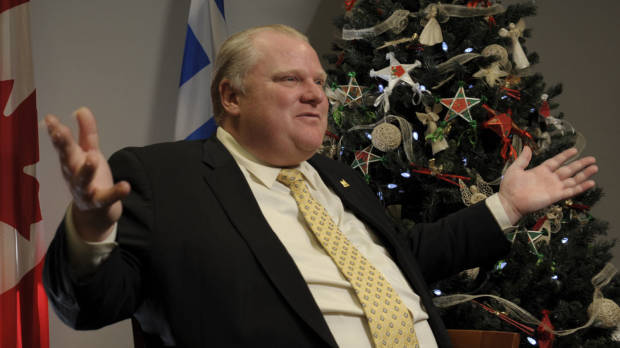
Coming off successive victories at his first substantive council meeting, Mayor Rob Ford has reason to be pleased with himself: He has slain a personal vehicle tax and trimmed councillors’ budgets, has declared light-rail transit dead in its tracks and lacks only the province’s approval to remove transit workers’ right to strike.

And he made it clear in an interview with The Globe and Mail Tuesday that he has no intention of toning it down as he heads into a new year. In 2011, he’ll have to conjure budget efficiencies his opponents say are impossible, construct brand-new transit plans to replace projects years in the making and confront the city’s strongest unions.

Mr. Ford said an auditor’s report due in January will vindicate what he’s been saying for years about waste at city hall – waste he still can’t specify but which he has told city staff to find, to the tune of hundreds of millions of dollars, over the next several weeks.

“There’s something coming from the auditor’s office that’s going to be pretty earthshaking. I can’t tell you what that is right now, but there’s a lot of waste,” he said. “I’m not happy with what he found but he did his job and I’ll have to deal with it.”

Continue reading

Skyrocketing real estate in Toronto’s wealthy enclaves endangering economic diversity

Photo by Deborah Baic/The Globe and Mail

Tuesday, December 21, 2010 – Globe and Mail
ANNA MEHLER PAPERNY

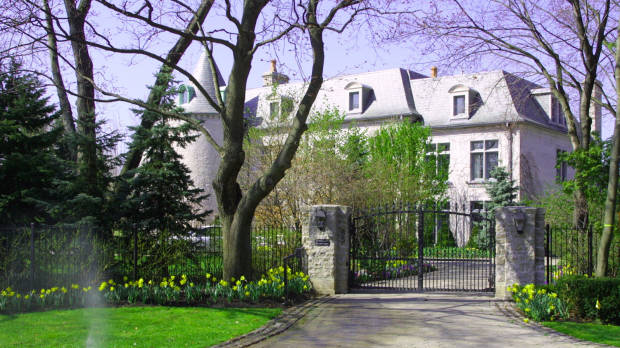
Growing up the northwest end of Toronto, Irma Baldanza aspired to live in a place like Lawrence Park.

“I remember driving through areas like Forest Hill and Lawrence Park, where my Dad would point out and say, ‘Look at these beautiful houses,’ that sort of thing,” she said. “Once I got married and we started thinking about owning a home, this is one of the areas we looked at.”

The couple started out with a relatively affordable house on Yonge Street and Blythwood Road in the mid-1980s, moving in 1990 to a red-brick Georgian house they could add on to over the next several years, accommodating a growing family. In the past two decades, Ms. Baldanza has seen the treed neighbourhood become increasingly attractive for wealthy families – and, more recently, developers and investors – drawn to the larger lots and green spaces.

In a city where property is increasingly at a premium, the rarity of a neighbourhood of large lots just blocks away from a major transit artery makes for dramatically increasing property values. It helps to have good schools – both public and private – and engaged residents eager to pitch in for fundraising and beautifying initiatives.

Continue reading

Toronto’s Three Cities: A metropole of extremes, losing middle ground

Photo by Peter Power/The Globe and Mail

Wednesday, December 15, 2010 – Globe and Mail
ANNA MEHLER PAPERNY

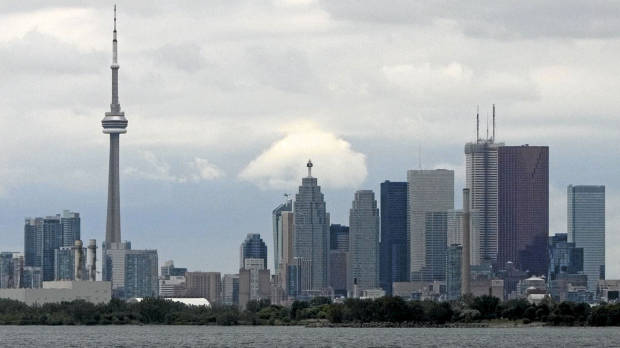
TORONTO — Toronto is becoming a city of stark economic extremes as its middle class is hollowed out and replaced by a bipolar city of the rich and poor – one whose lines are drawn neighbourhood by neighbourhood.

New numbers indicate a 35-year trend toward economic polarization is more pronounced: The country’s economic engine, which has long claimed to be one of the most diverse cities in the world, is increasingly comprised of downtown-centred high-income residents – most living near subway lines – and a concentration of low-income families in less dense, service- and transit-starved inner suburbs.

Three years ago, University of Toronto professor David Hulchanski published a paper on Toronto’s “Three Cities,” illustrating a growing socioeconomic disparity among the city’s census tracts.

But the three-way divide Prof. Hulchanski and his fellow Cities Centre researchers described is swiftly being reduced to two, according to a new paper they will release Wednesday. Toronto, a predominantly middle-class metropolis just three decades ago, is increasingly dominated by two opposite populations – one with an average income of $88,400, and another of $26,900.

Continue reading

Bulldozed buildings, fatal shootings, uprooted residents: Is Regent Park revitalization crumbling?


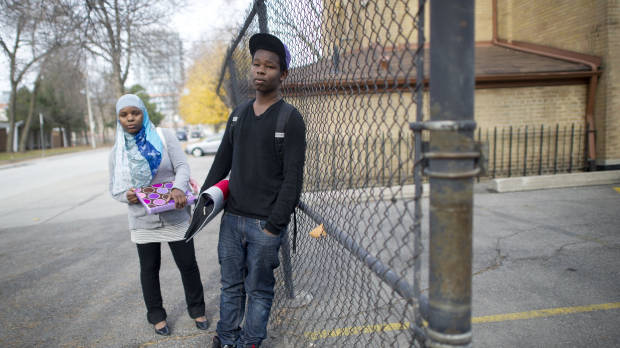
Fatima Animer, 16, and her brother Moubachar Animer, 14, in Regent Park.
(Photo by Kevin Van Paassen/The Globe and Mail)

Wednesday, November 17, 2010 – Globe and Mail
ANNA MEHLER PAPERNY

TORONTO — It’s supposed to be an urban-planning model – an example of what millions of dollars and decades of prepping, razing and rebuilding can do to transform a 60-year-old poverty enclave into a mixed-income downtown neighbourhood.

But right now, Regent Park is reeling after a string of shootings left three dead in as many weeks. Parents say they are afraid to let their children out after dark, even for the area’s free tutoring programs. Police have set up a neighbourhood-specific unit, in which officers conduct around-the-clock patrols that are as much about community engagement as they are about stopping crime.

Regent Park’s re-imagining is far from finished, and it will be years before the verdict is in on its success. Right now, residents of the 2,083 social-housing units are in flux – some already in new units, some in old ones waiting for demolition to begin, and others temporary townhouses while construction is in progress.

In the meantime, some argue the fear inspired by the recent violence and uncertainty over how well the renewal will work raise questions about exporting this model to social-housing complexes in the city’s most troubled neighbourhoods.

Continue reading

Eyes wide shut: Toronto Mayor David Miller’s exit interview

Saturday, October 9, 2010 – Globe and Mail
ANNA MEHLER PAPERNY

Seven years after he swept into office on a broom, Mayor David Miller still knows the value of a good prop.

He flips through a mini photo album with images of himself opening the city’s public pay toilet earlier this year (after 2,000 visits it has become, he notes with a degree of pride, a tourist attraction).

He pulls open the book of policy promises he ran on in 2006 – “I’ve done everything that’s in it.”

A book of elementary-school drawings of things students love about Toronto sits on the coffee table in his office, which overlooks a construction-ridden Nathan Phillips Square. Neighbourhoods, knights and “the ocean” figure prominently.

It’s kinder feedback than the outgoing mayor has gotten in a while. After months of an election in which candidates railed against a non-existent incumbent and a dysfunctional municipal government, all eyes are on an Etobicoke councillor leading the pack on promises he’ll clean up City Hall by doing the polar opposite of his left-leaning predecessor. And the electorate, if you believe every poll since June, loves the idea.

But barely 90 minutes before he formally endorses Joe Pantalone, the faithful deputy mayor polling in a distant third place – and on the same day the Canadian Club canned a speaking engagement featuring the departing mayor that had managed to lure only 19 attendees – David Miller insists we’ve got it all wrong.

Torontonians love the city, he says, and they love what he’s done with it. He wouldn’t change a thing. And although he refuses to summarize his legacy, he’s convinced that everyone – the premier he has slagged, the unions whose garbage strike cost him his popularity, the voters and his replacement – will figure out he was right all along.

Continue reading

Recession hit hard, recovery came slow for immigrants

Tuesday, October 5, 2010 – Globe and Mail
ANNA MEHLER PAPERNY and TAVIA GRANT

As employment grows with a reviving economy, so does the unemployment gap between the country’s highly educated newcomers and their Canadian counterparts.

Among university graduates, recent immigrants were hit hardest by the recession, and new research shows they’re still at a disadvantage compared to Canadian-born university grads as the job market picks up.

The employment gap between newcomers and people born in Canada is greatest among those with the highest credentials and educational backgrounds, according to a Community Foundations of Canada report to be released on Tuesday.

Continue reading

Green energy plan gives Ontario tourist town the blues

Monday, August 2, 2010 – Globe and Mail
ANNA MEHLER PAPERNY

BALA, ONT. — The view from the teal-tinged, bobbing wooden dock at Purk’s Place is cottage country – bucolic and conflicted.

To the right, Lake Muskoka, dotted with homesteads and holiday places on tiny islands; to the left, a railway bridge, century-old dam and the whoosh of Bala Falls dropping into Moon River.

And a string of neon-orange warning buoys: Dam ahead – keep away.

But what has residents, businesses and cottagers here on edge is not the existing pair of dams, both dating to the late 19th century. It’s a hydroelectric generator to be built metres away from the falls at the centre of town – 4.3 megawatts worth of Ontario’s vaunted goal to become North America’s green energy capital.

Continue reading

Failure to tap into immigrants’ skills costs billions

Thursday, June 10, 2010
ANNA MEHLER PAPERNY

In Nigeria, he helped design the athletes village for Abuja’s All-Africa Games.

But three years after moving to Canada in 2007 with a pregnant wife and big dreams, Yisola Taiwo has yet to land his first architecture job. His wife, Bunmi Sofoluwe-Taiwo, still hasn’t been able to find work after leaving her career with the Lagos government.

“Last year was terrible,” Mr. Taiwo said. An internship ended; he spent more than a year on employment insurance and working for no pay at a Toronto architecture firm.

In May, he started a two-month contract at the Diebold Company of Canada, working with architectural drawings to design building security systems in Mississauga. It’s not a bad gig, but he longs for something in his field.

The Toronto region has long boasted about its role as Canada’s diversity hub. But Toronto is doing a worse job of integrating immigrants than it was two decades ago, and it’s costing the economy estimated billions of dollars a year, according to a report being released Thursday by the city’s Board of Trade.

Continue reading

Almost home: Toronto’s Regent Park at a crossroads

Saturday, May 29, 2010 – Globe and Mail
ANNA MEHLER PAPERNY

TORONTO — Yasin Khawaja and his family know they’re almost home. The 22-year-old, his parents and two sisters are set to move into their apartment in Regent Park’s brand-new reincarnation.

They just don’t know when.

At first it was August. But earlier this month they were told to expect delays. Now the family waits on tenterhooks, a September reunion in Bangladesh facing postponement, until they find out their fate. “The whole thing has been kind of a mess,” he says.

But the tone in the Khawajas’ Shuter Street townhouse is one of excited, nervous anticipation when they talk about the upcoming move – a new building (with a balcony, he notes with pride), a new neighbourhood in the works and, maybe, a new way of providing social housing.

“They gave us choices, they gave us floor plans. … Whenever someone asks, ‘Where do you live?’ and I say, ‘Regent Park,’ they’re like, ‘Ohh, are you serious?’

“I’m hoping it’s better.”

Continue reading

A neighbourhood without children

Saturday, March 20, 2010 – Globe and Mail
ANNA MEHLER PAPERNY

Carol Finlay’s friends and family think she’s crazy. A neglectful would-be mother. An urban masochist.

Her audacious proposal? To move downtown to raise a family.

“[They say,] ‘You can’t raise a family. … That would be neglectful to children … it’s not enough space to raise children, it’s dangerous.’ ”

Ms. Finlay, 29, and her husband Charlie are moving in August from North York to a loft near the corner of Queen and Dovercourt, which they hope to convert into a three-bedroom condo. “Ninety per cent of our friends are going in the opposite direction.

“[But] our life is in Toronto and it didn’t make sense to us to spend so much of our time commuting,” Ms. Finlay says. “In North York we weren’t part of the community there as much as we would like to be. … We would like to start a family and that becomes even more important to us.”

And the city of Toronto wishes there were thousands more like them.

Surging demand for prized downtown real estate in a white-hot market has buyers snapping up new condos as fast as developers can build them – 951 high-rise units sold in January of this year, compared with 184 the year before and 508 during the market’s last peak in 2008.

For the most part, the city is on board with the onset of a hyper-dense metropolis of vertical neighbourhoods. But the people buying those $600,000 condos are young singles and couples and, to a lesser extent, retirees. This migration upward coincides with an exodus of families from the downtown core. In the 2006 census, children under 15 made up only 8.4 per cent of Trinity-Spadina’s population, compared with 16.3 per cent in the rest of Toronto.

The city is trying to change that. For months, Councillor Adam Vaughan has been working with developers on a social engineering project: to lure families into gleaming condominium boxes in the sky.

The to-do list is deceptively simple – families need space and services with an affordable price tag attached. Achieving that in one of the priciest real-estate markets in Canada is another story altogether.

It has been done elsewhere – notably Vancouver, which has seen its population of downtown children more than quintuple since 1986.

But developers shy away from the drastic measures and the minimum three-bedroom requirement Mr. Vaughan would like to see – they are skeptical as to whether this social-planning ploy will work.

If you build a kid-friendly condo, will families buy it?

Planning and growth

The city’s official plan to house more people in the downtown core calls for increasing density to take eco-conscious advantage of scarce urban space. But if Toronto’s downtown neighbourhoods are going vertical, argues Mr. Vaughan, those 30-storey elevators should have kids inside.

“You can’t sustain a city with a monoculture; you can’t segregate singles from families and seniors from young people. What we need when we build these buildings is to build vertical neighbourhoods, and that means we need to sustain economic diversity and social diversity.”

In November, the city’s planning and growth committee proposed requiring large developments to devote at least 10 per cent of their units to three-bedroom condos. The report was branded as unrealistic and restrictive by the development community. So industry representatives and the city have spent the past four months trying to hammer out a compromise.

Mr. Vaughan has high hopes for the finished product, which goes before committee next month. As well, he’d like to see more high-rises with family-oriented services such as daycares.

Ed Sonshine remembers Mr. Vaughan pestering him to include family-friendly units in summer of 2008, when Mr. Sonshine was designing a property with Tribute Homes at the corner of Queen and Portland. And the RioCan chief executive officer did – about 10 per cent of the 90 condos on sale have three bedrooms.

But there’s a catch: Less than 18 months before opening, “we haven’t sold any yet.”

“They’re a little bigger, so as a result they’re more expensive,” he says. The three-bedroom units start at $600,000. “And, you know, I’m not sure that people necessarily have it in their heads yet here that bringing up kids in a downtown environment is a good thing to do.”

The other 81 units, on the other hand, are almost all spoken for.

It’s not that Mr. Sonshine thinks the push to move families back into the downtown core is a bad one. “I’m just not sure it’ll work.”

For success stories, the city need look no further than Vancouver, which two decades ago began a push for family-friendly downtown condos: The city stipulated that all new developments had to be at least 25 per cent two-bedroom units or larger, and allowed them to build taller in exchange for parks, playgrounds and daycare facilities.

The result? The peninsula’s under-18 population soared to more than 7,000 in 2009 from 1,365 in 1986.

“It was a deliberate part of the vision from day one,” said city planning director Brent Toderian. He says Vancouver is the only North American city opening new elementary schools in its downtown core.

“Don’t give up on families downtown. They do want to live downtown, and our surveys have shown that if you design it well, they will choose the downtown over other options.”

affordability IS key

The catch is affordability: Vancouver’s Yaletown townhouses and False Creek condos aren’t cheap – and the families buying them can afford the higher price point. Mr. Toderian admits financial accessibility is something the city is still grappling with. If Toronto wants to make its downtown condos accessible to those that can’t afford half-a-million dollars, the city has its work cut out for it, says Stephen Deveaux, vice-president of land development for Tribute Communities. Mr. Deveaux has been working with the city on a family condo policy. It’s not crazy to try to move families downtown, he says. But it’s not easy.

“Affordability is the main issue, and if that could somehow be solved, perhaps we could find more of a market,” he said.

“What we build is market-driven. And if there were a market for three-bedroom units, we could deliver.”

Mr. Vaughan would love to see third parties help to make the homes more affordable – pension funds, for example, that would come in and take out second mortgages on units to help lower the purchasing cost for would-be inhabitants.

‘Close living’

David Michael Lamb considers himself a profoundly urban person: He works in the city. When he goes on vacations, he visits cities. As a CBC radio reporter and producer, he covers Canada’s largest. And living with his wife and daughter in a condo in west-end Liberty Village was an almost perfect fit.

But it was a very, very snug one: The storage locker quickly filled with baby clothes; they had to shop for small furniture that didn’t turn their tiny condo into a cramped cave.

“It’s close living,” Mr. Lamb said, but they made it work – until they were getting ready for a second child. Another, larger condo – one with a second storage locker, a third bedroom and a park nearby – would have been ideal. But they found nothing remotely suitable or affordable. The small Roncesvalles house where they’re living now is nice, he says, but he believes the city should take it upon itself to diversify a denser downtown core.

“If the city doesn’t somehow make sure that families can live downtown, then they will move out. And it’s not a healthy city when only one kind of person lives there.”

Ms. Finlay and her husband lucked out: As a saxophone player, he got a coveted loft at an Artscape development. The initiative provides affordable work and living space for the city’s artists. Five years from now, Ms. Finlay sees herself living in walking distance from parks, school and summer camps, and with a short commute. She’d rather not be the only one.

“I’d like to see less of our friends move away because they thought [it] was their only option.”