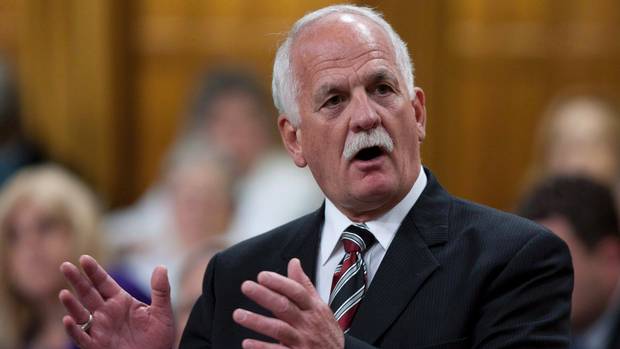
Double-bunking in prisons not a problem for Vic Toews

Adrian Wyld/The Canadian Press

Thursday, July 12 – Globe and Mail

ANNA MEHLER PAPERNY

Public Safety Minister Vic Toews says he has no problem with the number of federal inmates sharing cells built for one.

And even as he reiterated his commitment to building 2,700 new cells in existing prison facilities, he said those additional units aren’t meant to alleviate the pressures caused by double-bunking – because there’s no need.

Continue reading

Canada’s youth crime plans bewilder international observers

A group of boys play basketball at the St. Louis Juvenile Detention Center Tuesday, July 19, 2011. The juvenile rehabilitation program houses from 50 to 100 youth between the ages of 9 and 17.
(Photo by Whitney Curtis for the Globe and Mail)

Wednesday, July 20, 2011 – Globe and Mail
ANNA MEHLER PAPERNY

If Canada follows through on plans to crack down on miscreant youth, it’ll be one of the few jurisdictions in the world heading in that direction.

And the tough-on-crime approach in the face of contrary evidence is bemusing international observers.

Judges, criminologists and policy-makers in the United States, Britain and Australia – countries whose systems, for the most part, closely resemble Canada’s – can’t figure out why this country is planning to shift toward a jail-intensive approach. Everyone else seems to be doing the opposite, not for ideological reasons, but because evidence shows it works.

“It’s somewhat ironic, actually,” said Marc Mauer, executive director of the Washington, D.C.-based Sentencing Project, which studies jail policy across the United States.

“After nearly four decades of the so-called ‘get tough’ movement in the U.S., which has meant sending more people to prisons [and] keeping them there for longer periods of time, there’s beginning to be a shift away from that.”

Continue reading

Tory ‘tough on crime’ bill has youth advocates worried

Frontenac Youth Diversion Program Executive Director Daren Dougall, in Kingston, Ont.
(Photo by Harrison Smith/The Globe and Mail)

Tuesday, July 19, 2011 – Globe and Mail
ANNA MEHLER PAPERNY

The idea behind Canada’s current strategy to fight youth crime was deceptively simple: Put teens in jail if you have to, but only if you have to.

It was supposed to strike a balance between two competing anxieties: that young people were committing heinous crimes and not being punished appropriately; and that locking up impressionable teens created criminals who would spend the rest of their lives bouncing in and out of the penal system.

“There was considerable concern around whether the balance was quite right in terms of protection of the public and rehabilitation,” says Anne McLellan, the Liberal justice minister who brought in the Youth Criminal Justice Act in the late 1990s.

Continue reading

The young convicts of Canada’s ‘Criminal University’


“It’s like Criminal University,” says Oluwasegun Akinsanya. “All you do in jail is sit down and talk – what he did, what he did, what he did. You realize, ‘Hey, that’s an opportunity.’ You learn from their mistakes. You’ll come back and do a better version.”
(Photo by J.P. Moczulski for the Globe and Mail)

Monday, July 18, 2011 – Globe and Mail
ANNA MEHLER PAPERNY

Canada incarcerates more convicted youth than almost any similarly industrialized country.

And new federal crime legislation is poised to drive those numbers higher, even though imprisoned teens are statistically less likely to get jobs after they’re released and, if anything, are more likely to reoffend.

Years after enacting laws that have been successful in reducing youth incarceration rates, Canada still sends five times more of its convicted teens into custody than England and Wales, according to data obtained from the British justice ministry and Statistics Canada’s justice arm.

Continue reading