
Bulldozed buildings, fatal shootings, uprooted residents: Is Regent Park revitalization crumbling?


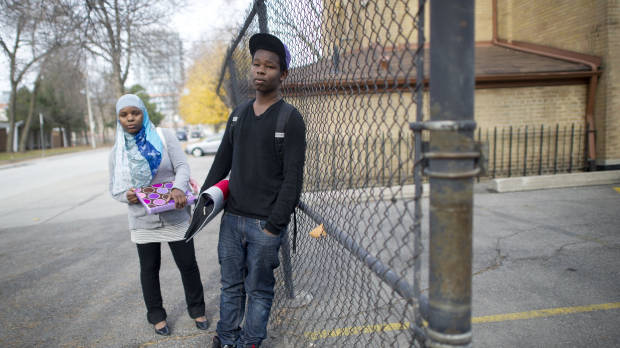
Fatima Animer, 16, and her brother Moubachar Animer, 14, in Regent Park.
(Photo by Kevin Van Paassen/The Globe and Mail)

Wednesday, November 17, 2010 – Globe and Mail
ANNA MEHLER PAPERNY

TORONTO — It’s supposed to be an urban-planning model – an example of what millions of dollars and decades of prepping, razing and rebuilding can do to transform a 60-year-old poverty enclave into a mixed-income downtown neighbourhood.

But right now, Regent Park is reeling after a string of shootings left three dead in as many weeks. Parents say they are afraid to let their children out after dark, even for the area’s free tutoring programs. Police have set up a neighbourhood-specific unit, in which officers conduct around-the-clock patrols that are as much about community engagement as they are about stopping crime.

Regent Park’s re-imagining is far from finished, and it will be years before the verdict is in on its success. Right now, residents of the 2,083 social-housing units are in flux – some already in new units, some in old ones waiting for demolition to begin, and others temporary townhouses while construction is in progress.

In the meantime, some argue the fear inspired by the recent violence and uncertainty over how well the renewal will work raise questions about exporting this model to social-housing complexes in the city’s most troubled neighbourhoods.
Continue reading

Eyes wide shut: Toronto Mayor David Miller’s exit interview

Saturday, October 9, 2010 – Globe and Mail
ANNA MEHLER PAPERNY

Seven years after he swept into office on a broom, Mayor David Miller still knows the value of a good prop.

He flips through a mini photo album with images of himself opening the city’s public pay toilet earlier this year (after 2,000 visits it has become, he notes with a degree of pride, a tourist attraction).

He pulls open the book of policy promises he ran on in 2006 – “I’ve done everything that’s in it.”

A book of elementary-school drawings of things students love about Toronto sits on the coffee table in his office, which overlooks a construction-ridden Nathan Phillips Square. Neighbourhoods, knights and “the ocean” figure prominently.

It’s kinder feedback than the outgoing mayor has gotten in a while. After months of an election in which candidates railed against a non-existent incumbent and a dysfunctional municipal government, all eyes are on an Etobicoke councillor leading the pack on promises he’ll clean up City Hall by doing the polar opposite of his left-leaning predecessor. And the electorate, if you believe every poll since June, loves the idea.

But barely 90 minutes before he formally endorses Joe Pantalone, the faithful deputy mayor polling in a distant third place – and on the same day the Canadian Club canned a speaking engagement featuring the departing mayor that had managed to lure only 19 attendees – David Miller insists we’ve got it all wrong.

Torontonians love the city, he says, and they love what he’s done with it. He wouldn’t change a thing. And although he refuses to summarize his legacy, he’s convinced that everyone – the premier he has slagged, the unions whose garbage strike cost him his popularity, the voters and his replacement – will figure out he was right all along.

Continue reading

Recession hit hard, recovery came slow for immigrants

Tuesday, October 5, 2010 – Globe and Mail
ANNA MEHLER PAPERNY and TAVIA GRANT

As employment grows with a reviving economy, so does the unemployment gap between the country’s highly educated newcomers and their Canadian counterparts.

Among university graduates, recent immigrants were hit hardest by the recession, and new research shows they’re still at a disadvantage compared to Canadian-born university grads as the job market picks up.

The employment gap between newcomers and people born in Canada is greatest among those with the highest credentials and educational backgrounds, according to a Community Foundations of Canada report to be released on Tuesday.

Continue reading

Khadr’s lawyer out of hospital, fit to resume trial


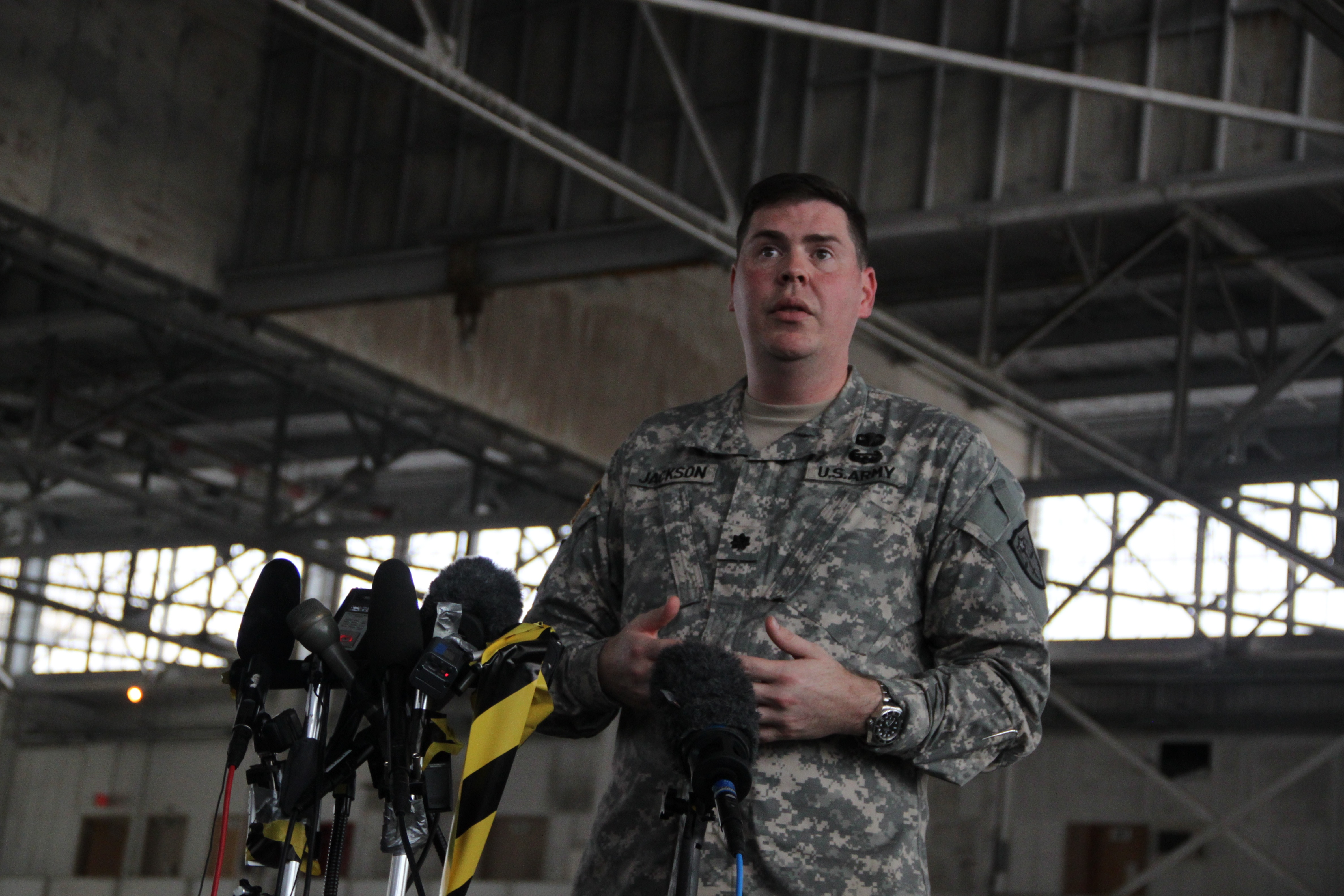
Lieutenant-Colonel Jon Jackson, Omar Khadr's military-appointed lawyer, is pictured speaking to the media in a hangar at the U.S. Naval Base in Guantanamo Bay.
(Photo by Anna Mehler Paperny/Globe and Mail)

Tuesday, August 24, 2010 – Globe and Mail
ANNA MEHLER PAPERNY

Omar Khadr’s lawyer is out of hospital, is off painkillers and will be able to go to trial once the Canadian detainee’s Guantanamo Bay hearing resumes.

Dates for the trial, postponed for about a month after Lieutenant-Colonel Jon Jackson collapsed in pain during cross-examination, are still up in the air. But witnesses are being asked to clear their day books as part of the complex scheduling that goes into co-ordinating war-court proceedings at the U.S. naval base.

Stephen Xenakis, the retired brigadier-general and a defence-team physician in close contact with Mr. Khadr, is preparing to make his case before the war tribunal. He hopes to convince the seven-person military jury what military judge Colonel Patrick Parrish didn’t believe: that the now 23-year-old Mr. Khadr endured enough physical and psychological torment to traumatize him and render his testimony unusable.

Continue reading

The Guantanamo detainee dilemma

Monday, August 16, 2010 – Globe and Mail
ANNA MEHLER PAPERNY

GUANTANAMO BAY — There have been calls to close Guantanamo Bay’s notorious detention centre since the first blindfolded, shackled detainees walked onto the base’s tarmac in January, 2002. But what do you do with the 176 people remaining behind the razor wire and green mesh?

As the camp’s population slowly dwindles and cases against those the U.S. government plans to prosecute inch forward, that question is becoming tricky to answer.

Who poses a risk – to the United States, or elsewhere? Who would be in danger if transported to their country of origin? What do you do if a detainee would rather stay, or if you can’t find a country willing to accept released prisoners?

Continue reading

Khadr trial asks jury: Jihadist or scared teen?

Friday, August 13, 2010 – Globe and Mail
ANNA MEHLER PAPERNY

GUANTANAMO BAY — Omar Khadr was either an enthusiastic teen jihadist who happily planted explosive devices and comforted himself in times of loneliness with thoughts of killing U.S. soldiers.

Or he was a frightened, cowed 15-year-old, dragged by a zealous father to Afghanistan against his will, caught up with a bad crowd, taken captive while gravely wounded and tortured into submission and confession by his captors.

The 23-year-old Canadian’s military jury was presented two contrasting portraits of the young man. Duelling sides of his Guantanamo Bay war-crimes trial sought to trump each other in painting what happened during a protracted 2002 Afghan firefight that left a U.S. army sergeant dead and the then-15-year-old severely wounded in U.S. custody.

But the opening salvos in what promises to be a long battle of competing narratives were cut short Thursday when Mr. Khadr’s military-appointed lawyer passed out during cross-examination, apparently from pain related to gallbladder surgery six weeks ago.

Continue reading

The jury who will decide Omar Khadr’s fate

Thursday, August 12, 2010 – Globe and Mail
ANNA MEHLER PAPERNY

GUANTANAMO BAY — Omar Khadr’s trial begins in earnest Thursday, with lawyers set to give opening arguments after days of grilling would-be jurors and settling on a seven-person panel to decide the fate of the first person tried in the Obama administration’s war-commissions process.

Next come witnesses for the prosecution and defence; the trial will likely go for weeks before a verdict is reached.

Eight of the original 15 members of Mr. Khadr’s jury pool were dismissed Wednesday, after lawyers made arguments to get rid of potential jurors they worry would not be sympathetic to their arguments.

Prosecution lawyer Jeff Groharing tried to convince military judge Colonel Patrick Parrish to jettison jurors who expressed reservations about Guantanamo Bay, detainee treatment and trying 15-year-olds as adults.

Continue reading

With a polite introduction of the accused, jury selection begins in Khadr trial

Wednesday, August 11, 2010 – Globe and Mail
ANNA MEHLER PAPERNY

GUANTANAMO BAY, CUBA — A fighter pilot from the first Gulf War; a former military policewoman; a battalion commander who lost troops to an improvised explosive device in Baghdad.

Omar Khadr got his first glimpse of the people who will decide his fate in a Guantanamo Bay courtroom Tuesday. Lawyers for the prosecution and defence spent hours quizzing 15 panel members on everything from their views on al-Qaeda and prosecuting juveniles, to the ages of their children and their military experience.

The session offered a look at the individuals – all members of the U.S. armed forces – who will decide not only the verdict in the 23-year-old Canadian’s case, but also his sentence in the event of a conviction.

Continue reading

Khadr’s confessions ruled admissible

Tuesday, August 10, 2010 – Globe and Mail
ANNA MEHLER PAPERNY

GUANTANAMO BAY, CUBA — A Guantanamo Bay military judge has dealt a blow to Canadian Omar Khadr’s legal case: All the confessions the prosecution wanted to submit at his war-crimes trial are fair game.

The decision, coming late Monday afternoon, supports the prosecution’s argument that threats of gang rape and alleged abuse in one interrogation do not taint confessions in another.

It dramatically strengthens the most serious charge against Mr. Khadr – that of murdering a U.S. Army sergeant in an Afghan firefight at the age of 15. If convicted, the 23-year-old could face life imprisonment.

Now, after formally entering a not guilty plea on his client’s behalf, Mr. Khadr’s lawyer will have to convince a panel of military jurors that the evidence against Mr. Khadr is “poisoned,” unreliable and that the case falls apart without it.

Continue reading

As Omar Khadr gets ready to face military court, a letter to his lawyer highlights his angst and sense of persecution

Monday, August 9, 2010 – Globe and Mail
ANNA MEHLER PAPERNY

Sitting in court, heavy brows furrowed, fists propped under bearded chin and black sneakers looking out of place with loose white prison garb, he looks like a profoundly fed-up twentysomething.

But in a letter to his Canadian lawyer earlier this year, the scrawled handwriting and syncopated cadence read like those of a much younger, conflicted individual: “Sometimes there are things you can’t say, but rather write on paper, and even if i were to tell you you wont understand,” it opens. “So anyway here are the things.”

“It seems that we’ve done everything,” he adds later in the letter released recently by the lawyer, “but the world doesn’t get it. … I really don’t want to live in a life like this.”

“I hate being the head of the speer, Dennis.”

Continue reading