Ontario doctors still in the dark on drug database

Remember back when Ontario rolled out an online narcotics-prescription database – one meant to track exactly who is prescribing what to whom? The idea is to prevent “double-doctoring” and ensuring that doctors, pharmacists and Health Ministry officials ensure that people who need drugs are getting them.

The database was in testing phase as of November, 2011 and was supposed to be operational early this year. But the people prescribing the drugs still can’t access it. That means they have no idea what other drugs a potential patient could be taking, or was taking. In some cases, it means patients can’t get the drugs they need.

Toronto doctor Irfan Dhalla said doctors still have no idea when they’re going to get in on this database – but they’d really, really like to.

Calls for supervised injection sites meet resistance in Ontario

Photo by John Lehmann/The Globe and Mail

Thursday, April 12, 2012 – Globe and Mail
ANNA MEHLER PAPERNY

TORONTO — The battle over whether to give addicts a safe place to inject has moved to Ontario from the West Coast.

When the Supreme Court of Canada handed Vancouver’s supervised injection site a legal victory late last year by denying the federal government’s attempt to shutter it, many observers expected the ruling to give rise to similar sites across Canada.

Not so fast.

Continue reading

How chronic drug shortages became Canada’s new normal

Karen Reeves, who was diagnosed with epilepsy 11 years ago, is photographed at her home in Waterloo, Ont. Thursday, March 29, 2012. Reeves has struggled to get epilepsy drugs and is now forced to travel to Florida every 3 months to fill her prescription.
Photo by Kevin Van Paassen/The Globe and Mail

Wednesday, April 11, 2012 – Globe and Mail
ANNA MEHLER PAPERNY and KIM MACKRAEL

When the only drug that effectively stopped Karen Reeves’s seizures became unavailable in Canada, she didn’t find out until her pharmacist couldn’t fill her prescription – the medication wasn’t there. Replacement shipments never showed up.

Welcome to the new normal of prescription drug supplies.

Continue reading

In Jason Kenney’s immigration system, the labour market calls the shots

Photo by Fernando Morales/The Globe and Mail

Thursday, April 5, 2012 – Globe and Mail

ANNA MEHLER PAPERNY

Jason Kenney has had it with incremental measures.

“It frustrates the hell out of me,” the Immigration Minister told The Globe and Mail’s editorial board on Wednesday. “We’re bringing hundreds of thousands of people into the country to end up, many of them, unemployed or underemployed in an economy where there are acute labour shortages.”

Continue reading

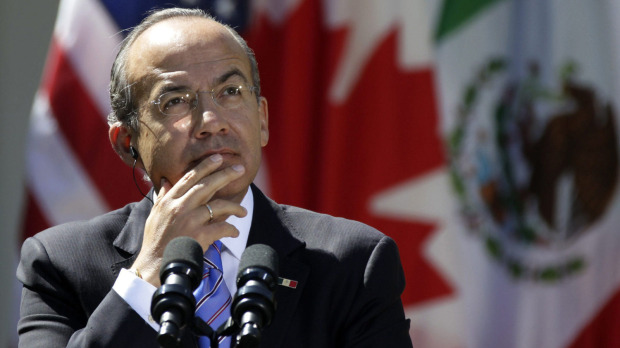
Canadian Cynthia Vanier’s arrest a success in international security co-operation, Mexico’s Calderon says

Photo by Carolyn Kaster/AP

Wednesday, April 4, 2012 – Globe and Mail

ANNA MEHLER PAPERNY

Mexican President Felipe Calderon cites the arrest of Canadian consultant Cynthia Vanier on accusations of trying to smuggle one of Moammar Gadhafi’s sons out of Libya as a prime example of successful security co-operation between Mexico, Canada and the United States.

Thing is, Canada has yet to elucidate exactly what its role was in Ms. Vanier’s arrest and the investigation leading up to it – and her lawyer, among others, would really like to know.

Continue reading

No plans to make Suboxone more easily available in Ontario, Deb Matthews says

Photo by Moe Doiron/The Globe and Mail

Ontario Health Minister Deb Matthews says the province has no immediate plans to put Suboxone on the Ontario Drug Benefit, which would make it more readily available to treat addicts who can’t get methadone, a more common treatment for opioid addiction. Health-care practitioners, especially in remote areas, want to use Suboxone more in cases where there are simply no licensed methadone doctors around, or no spaces available. Buprenorphine, the active ingredient in Suboxone, is supposed to be safer and easier for others (nurses, for example) to give out. It’s also really expensive.

Continue reading

Canada’s pandemic response needs work, federal health agency says

Photo by Henry Romero/Reuters

April 3, 2012 – Globe and Mail

ANNA MEHLER PAPERNY

There are still serious shortcomings in the way public-health bodies communicate with physicians, nurses and pharmacists on the front lines of a pandemic, says the Public Health Agency of Canada.

And almost three years after a flu pandemic put the country on high alert, the federal agency has put out a call for a new strategy to improve communication with clinicians during pandemic response.

Continue reading